Sub Menu Here
As traditional cleaning chemicals come under increasing regulatory and public scrutiny, manufacturers of industrial cleaning products are looking towards environmentally-friendlier alternatives.
Introducing ‘green’ cleaning chemicals like acetic, citric, glycolic, lactic, methanesulphonic and peracetic acid.
How do these compare to each other, as well as to the traditional mineral acids like hydrochloric, nitric, phosphoric and sulphuric acid? Which might be the best fit for my green cleaning product formulations?
Environmentally-friendly acids usually have a number of key properties and traits.
Chiefly, they are biodegradable, meaning they break down safely into harmless component parts rather than persisting in the natural environment. Unlike traditional inorganic mineral acids, many are derived from plant-based and organic sources.
Additionally, many of these acids have low toxicity and fuming. This makes them safer for human handling and use in enclosed spaces, and their typically lower levels of corrosiveness makes them less damaging to sensitive metals and equipment.
Importantly, these eco-friendly acids can still perform the important heavy-duty cleaning role. That is, removing scale, rust and mineral deposits through descaling and chelating action.
Eco-friendly industrial cleaning acids compared |
||||
| Name | Acid strength (pKA) | Primary benefits | Metal compatibility | Sustainability profile |
| Acetic | Weak (4.76) | Versatile solvent; effective against carbonates and light scale; good grease removal | Can cause pitting on 304 stainless at higher temps; aggressive to copper alloys | Bio-sourced: readily biodegradable |
| Citric | Moderate (3.13) | Strong chelating properties; good descaling | Safe on 316 stainless; corrodes zinc and aluminium | Renewable: fermentation-derived |
| Glycolic | Moderate (3.83) | Penetrates deposits rapidly due to small molecular size; effective rust removal | Less corrosive than mineral acids; compatible with inhibited stainless | Low impact: low VOC, high water solubility, 90% biodegradable within 7 days |
| Lactic | Moderate (3.86) | Antimicrobial; effective organic soil removal; mild descaling | Gentle on most metals; preferred for food contact surfaces | Bio-sourced: fully renewable carbon source, meets OECD 301 standards |
| Methanesulphonic acid (MSA) | Strong (-1.9) | Rapid descaling; high efficiency at low concentrations | High compatibility with most alloys, including stainless and nickel | Phosphate-free: readily biodegradable |
| Peracetic | Weak (8.2) | Potent biocide and sanitiser; destroys biofilms; fast-acting at low temps | Excellent on 316 stainless; severe effect on aluminium, corrosive to copper/brass | Zero residue: breaks down into water, O2 and vinegar |
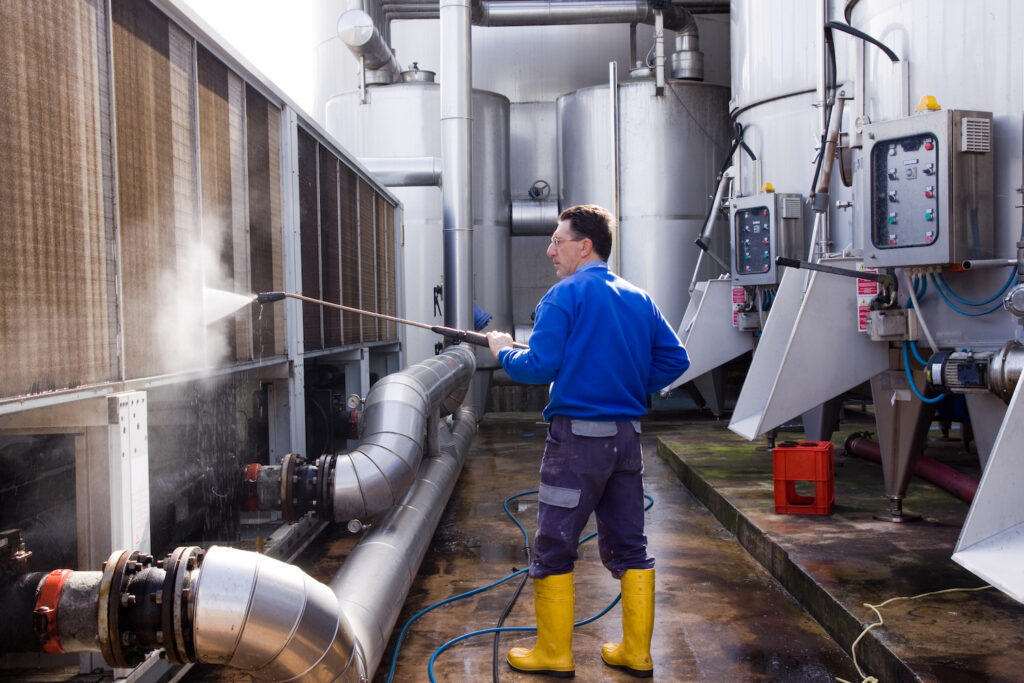
Acids like hydrochloric, phosphoric, sulphuric and nitric acid still very much have their place in industrial cleaning and descaling.
But due to regulatory pressure, equipment sensitivity and sustainability targets, formulators are increasingly looking to scale up use of alternative organic acids, including as part of blended cleaning systems.
We have over 50 years’ experience supplying quality chemical solutions to I&I cleaning industry across the UK and Europe.
This includes ‘green’ acids like acetic, glycolic, lactic and peracetic acid, as well as traditional solutions such as hydrochloric, nitric, phosphoric and sulphuric acid.
Contact our product experts to discuss your requirements.